|
|
 |
Powder Details

 |
IS0304
|
Microcrystalline Silica Powder - IS0304 (Average 2.5 um)
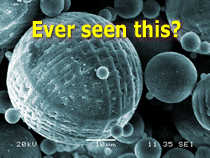
Microcrystalline silica fillers and extenders are produced from a unique alpha quartz. With morphology of equally sized crystals in a grape like cluster, it is easily divided, wetted and dispersed in waterborne and solvent based systems. The surface area of these crystals is unaffected by additional milling, producing a uniform rate of oil absorption regardless of particle size. The silica filler is insoluble in water, abrasion resistant and non-conductive, and unaffected by the strongest acids and bases.
These irregularly shaped particles produce excellent flatting and consistent batch to batch viscosity, gloss and sheen properties. Medium to coarser grades are effective matting agents in interior architectural coatings with excellent uniformity between 60 gloss and 85 sheen. It's uniform oil absorption properties also produce consistent gloss and sheen values regardless of substrate type or application technique. High Mohs hardness and low moisture properties also improve stain and burnish resistance.
Microcrystalline silica fillers excel in industrial and maintenance coating formulations. Finely divided grades offer superior chemical resistance, corrosion resistance and inter-coat adhesion in industrial primer applications. Coarser grades are utilized in industrial topcoats for flatting, chemical, corrosion and abrasion resistance. Coatings prepared for electrical insulating properties, including potting compounds, also employ microcrystalline silica fillers for superior insulating, dispersion and anti-settling properties.
Typical Applications
Architectural Coatings
Architectural coatings, often also referred to as decorative coatings, represent the largest coatings market globally, in both volume and value terms. Often simply referred to as "paint", these products have two primary functions - to protect and preserve the integrity of the painted substrate, and to impart a pleasing appearance.
Microcrystalline silica powder is frequently chosen for interior paint due to its excellent flatting and "touch-up" behavior. It offers thixotropy and provides moisture barrier properties in both primers and top-coats with cost-effective durability and high brightness.
OEM - Industrial Coatings
These coatings are factory-applied to manufactured goods as part of the production process. Industrial coatings are also commonly referred to as OEM (meaning "original equipment manufacture") coatings. The function of these coatings is similar to that of architectural coatings, namely to both protect and beautify the substrate, in this case industrial goods. Customers of these paints are typically equipment manufacturers who apply the paints to their particular products. As these products are part of the original manufactured item, the quality of this coating reflects directly on the quality image of the product.
Powder Coating
In the case of powder coatings the formulation components, including resins, pigments, and additives, are melt-blended in a plastic extrusion process and then ground into a fine powder, which is packaged and sold to customers. For application to a substrate, the powder is mixed with compressed air, pumped into spray guns and electronically charged. The object to be coated is electrically grounded so that the charged powder adheres to it in the spraying process. Once coated, the object is heated until the particles fuse and cure.
Microcrystalline silica powders add value to powder coatings in much the same way as they do in liquid paint systems. They are highly effective in super-durable and clear powder coatings due to its unique combination of refractive index and other mineral properties. Low in bulk density they offer efficient powder coating coverage.
Clear Coatings
Clear coatings are a subset of architectural coatings, industrial coatings, and powder coatings, and are used to impart a desired surface appearance (either glossy or matte finish) as well as to protect a substrate from abrasion or other damage. It is generally desirable for these coatings to have a high degree of transparency or "see through" clarity, so that substrate details, such as wood grain for furniture and flooring, are crisp and defined.
Microcrystalline silica provides a uniquely occurring combination of optical and physical properties which are ideal for clear systems requiring improved durability, light stability, and resistance to moisture. A range of different grades are available to achieve desired gloss/matte levels. Wood and furniture coatings can be loaded to 15-20% solids without noticeable haze to improve abrasion and scratch resistance.
Marine/Special Purpose
This classification refers to a diverse range of coatings systems, with applications and performance requirements, which overlap those for the Industrial Coatings sector. However in this category the coatings can be applied by a diverse group (businesses, individuals, government agencies, etc.) and usually for maintenance applications, whereas industrial coatings are usually applied by an original equipment manufacturer. In some cases these coatings are designed for specialized applications and for withstanding unusual environmental conditions. Examples of special purpose coatings include industrial maintenance paints, traffic paints, marine coatings, automobile refinish coatings, roof coatings, and aerosols.
As the performance requirements of these paints are essentially identical to Industrial Coatings, the same range of microcrystalline silica products can be found in these applications. |
|
|
|